Jayati Ghosh My questions are: What is the nature of the capitalism we are experiencing today, and how does it relate to democracy? How much of this can be traced to purely market forces, and how do these interact with power? It is not generally considered effective to provide the punchline first, but even so, let me outline my basic answer in broad strokes. I believe that capitalism has always been dependent on the state, it is fundamentally antithetical to democracy, it [undermines] the ability of the people to express themselves freely and to have a say in all decisions that affect them. It is an evolutionary process in which the very logic of capitalism undermines democracy.
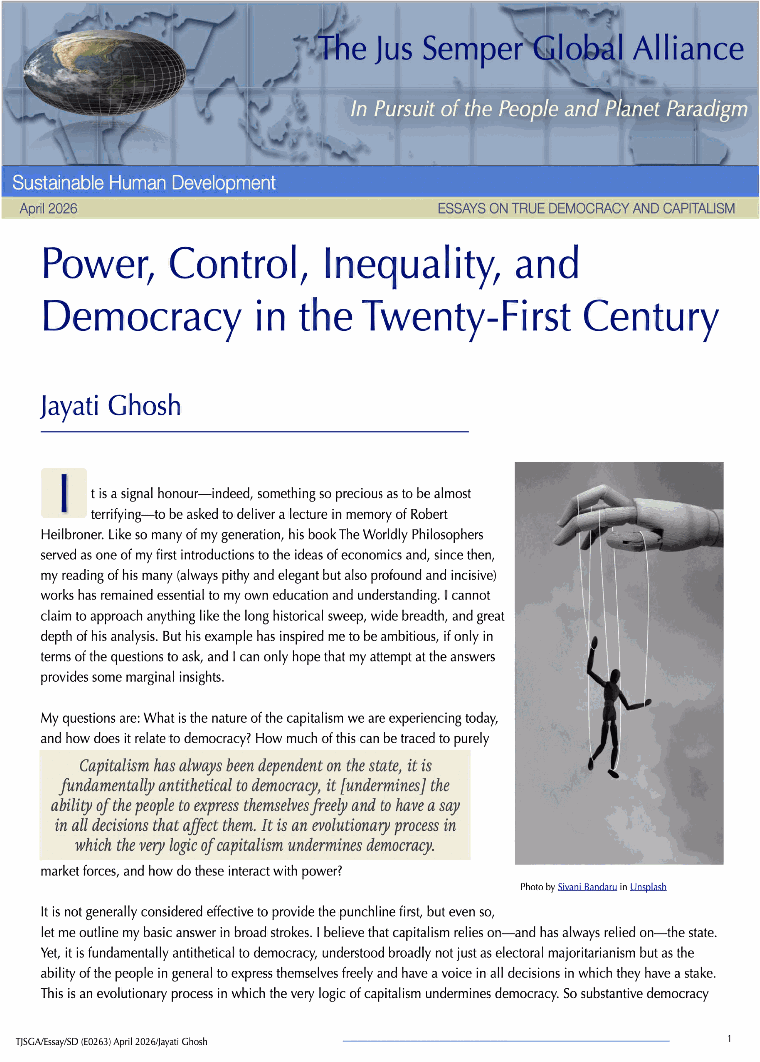
For a full read of this brief, click here or on the picture to download the pdf file.
|




- © The Jus Semper Global Alliance
| Home |  | Resources | | Economic Data | | Power, Control, Inequality, and Democracy in the Twenty-First Century |


